Independent inputs
Distributed phones contribute signals from different devices, locations, and networks.
Unetwork task layer
Entropy is not available on iOS because of background activity limits. Paid production is planned for Android and desktop, subject to final commercial terms.
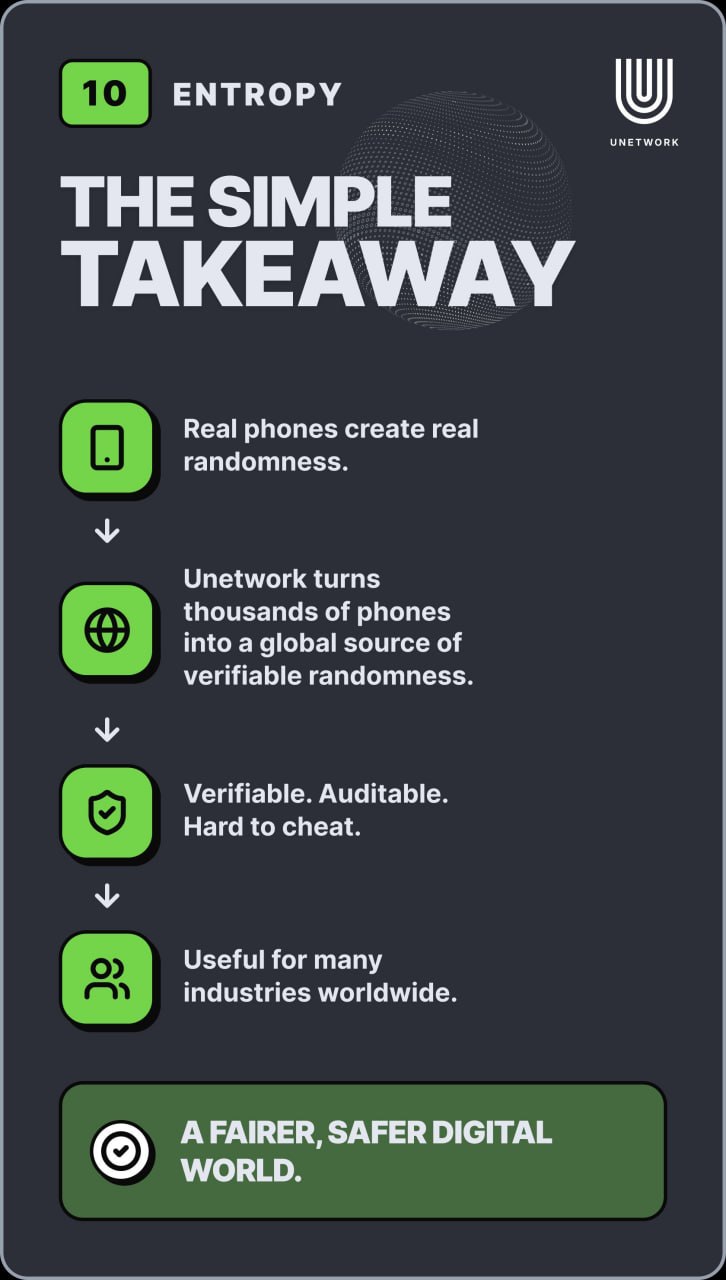
Real devices can help generate real-world entropy.
Jump to section
Current section: Simple takeaway
Entropy Task
Entropy means randomness. Modern digital systems rely on randomness to remain secure, fair, decentralized, and resistant to manipulation.
Unetwork transforms distributed phones and independent inputs into a verifiable randomness layer designed for transparency, security, and decentralization.
Auditable. Resistant to manipulation. Built for trust.
Distributed phones contribute signals from different devices, locations, and networks.
Validated inputs can be filtered, combined, and checked so the randomness layer is easier to audit.
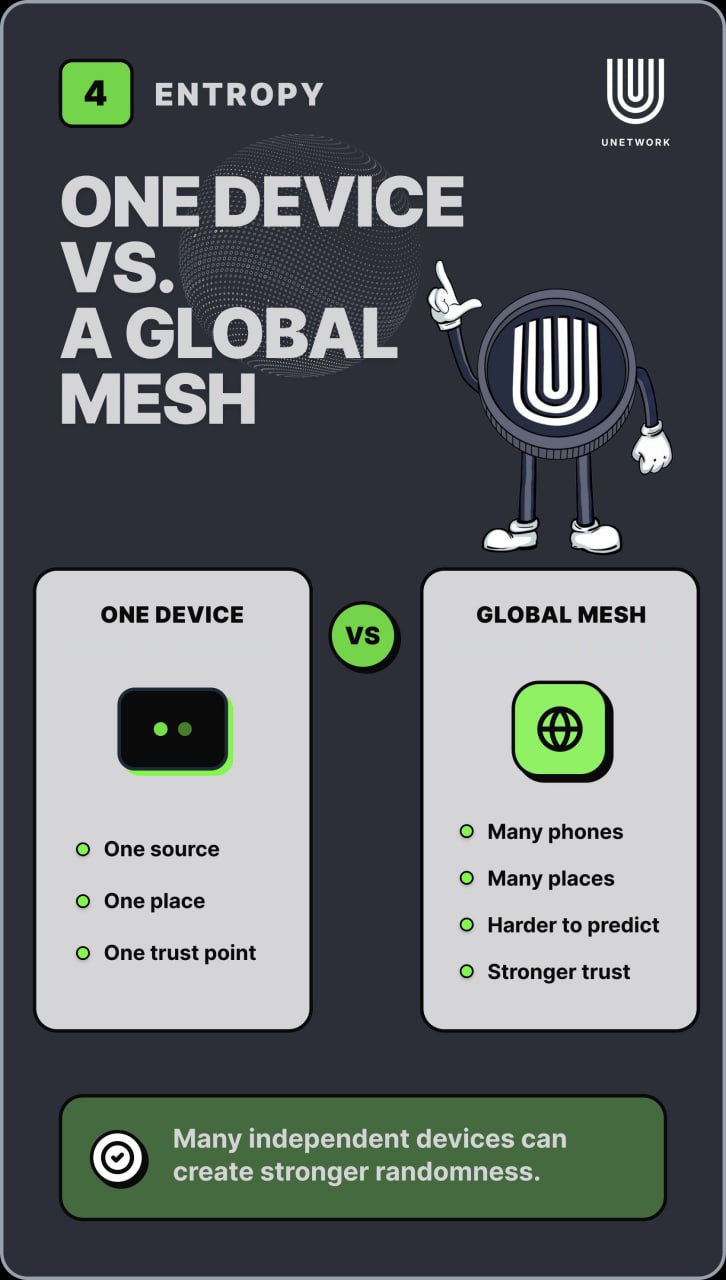
No single machine, location, or party should be able to predict or manipulate the final entropy source.
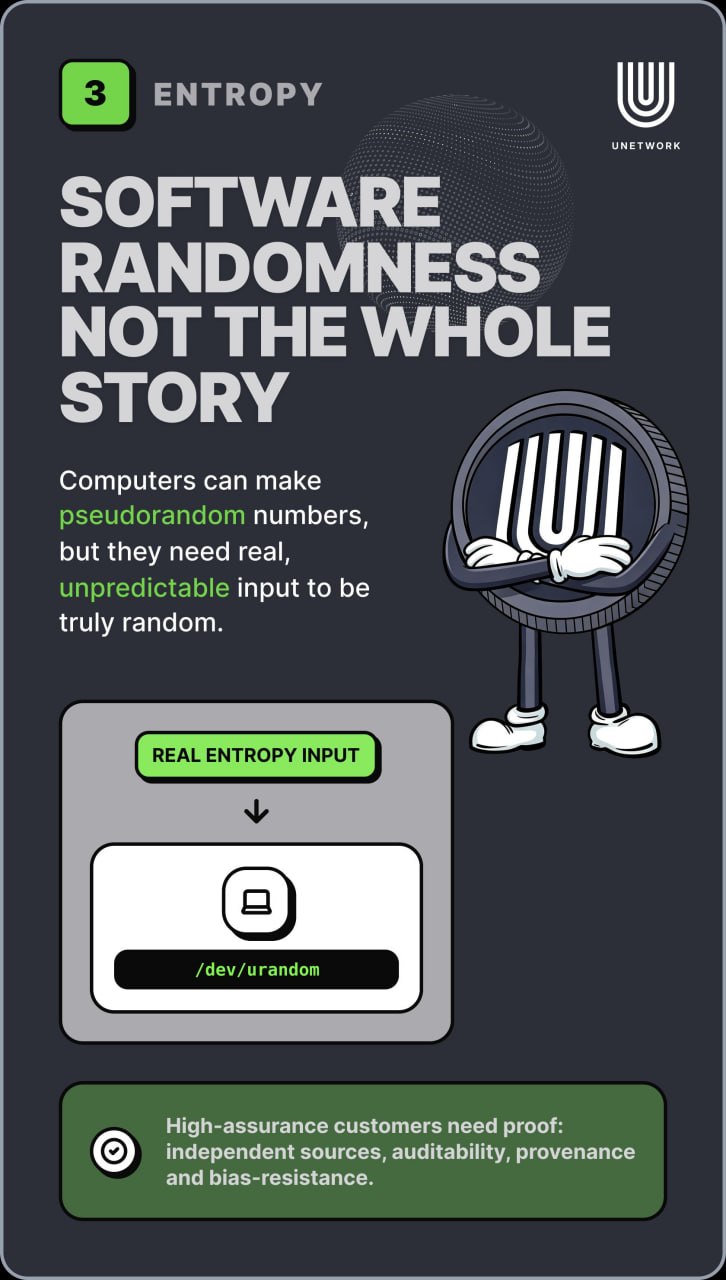
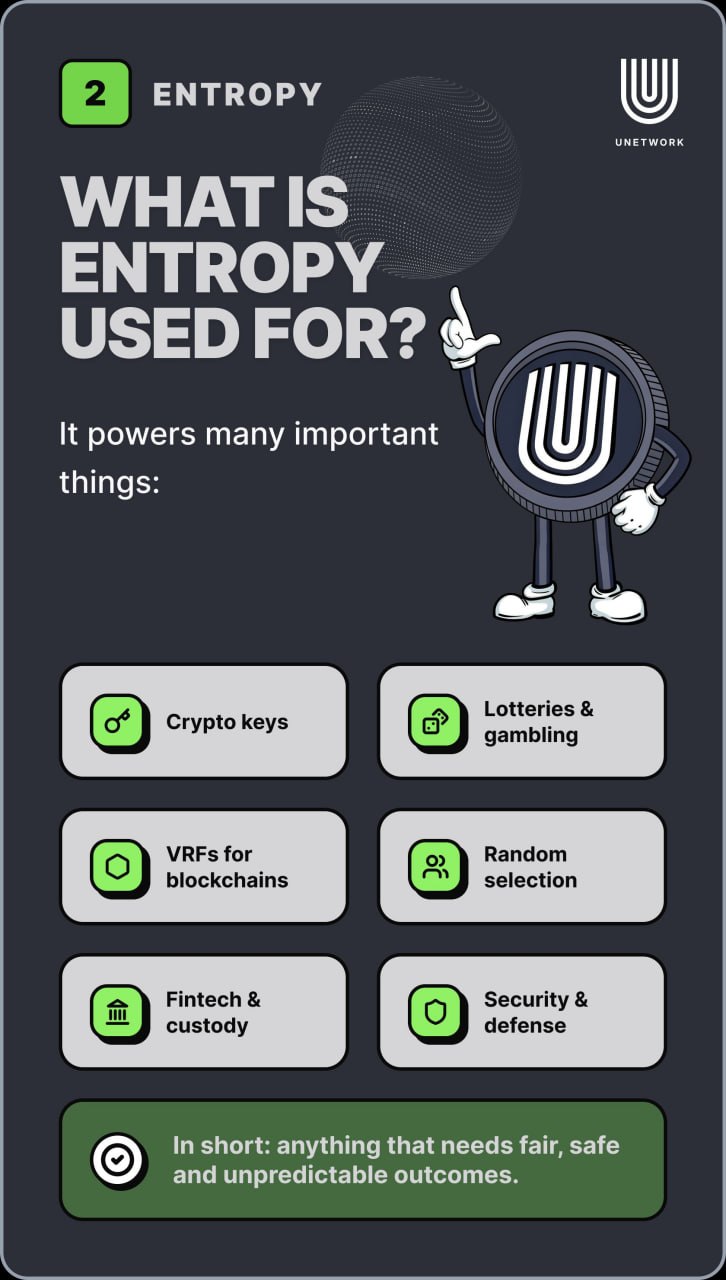
Randomness is essential for cryptography, blockchain validation, gaming, financial services, cybersecurity, AI, defense, and other systems where outcomes must be fair and impossible to predict.
As computing power advances, especially with AI and future quantum technologies, traditional randomness methods may become more vulnerable.
A single machine can generate randomness, but a distributed network of real phones can provide many independent signals from different devices, locations, and networks.
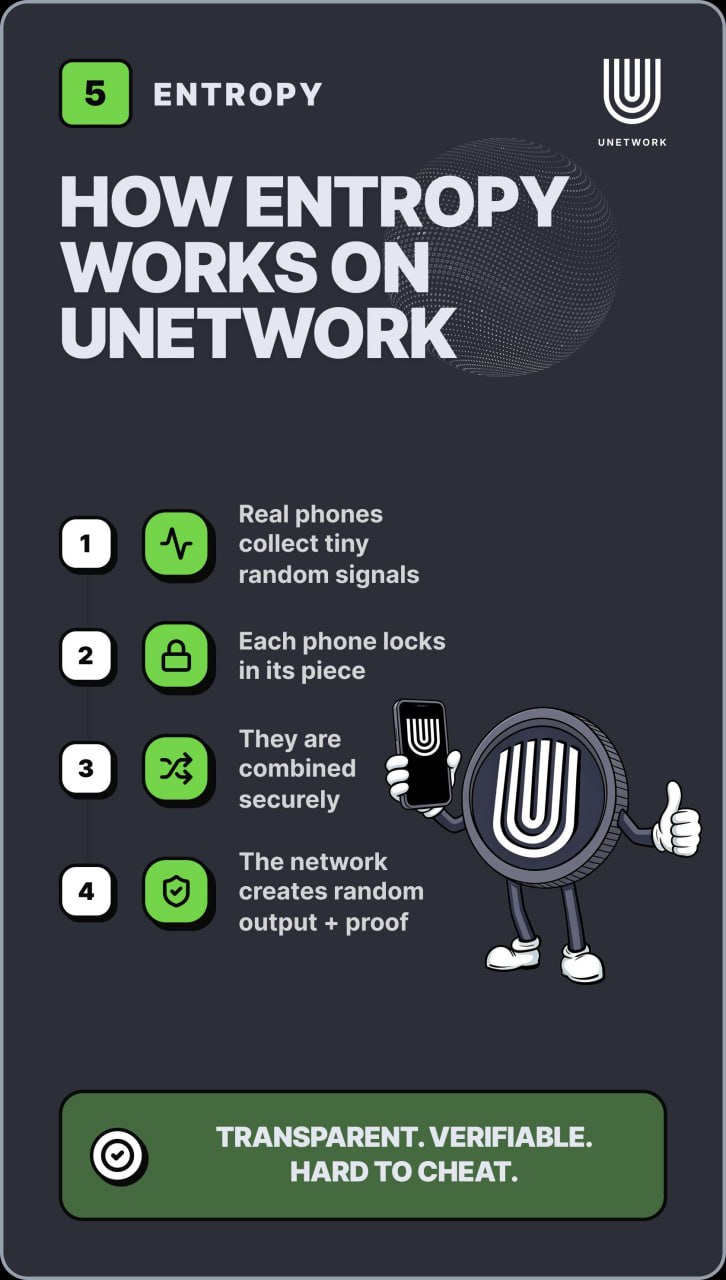
Device sensors and independent real-world inputs generate small entropy samples.
Bad, fake, or low-quality signals can be filtered before they influence the output.
Thousands of decentralized contributors can strengthen the shared entropy pool.
The result is designed to be auditable, manipulation-resistant, and cryptographically verifiable.
Entropy is not available on iOS because of background activity limits. Paid production is planned for Android and desktop, subject to final commercial terms.
This decentralized entropy layer can complement existing technologies such as verifiable random functions, while adding real-world sources of randomness that centralized systems cannot easily replicate.
The same distributed edge infrastructure that supports telecom services can also support new industries and revenue-generating services.
Not just generating randomness, but helping prove where it came from, how it was created, and why it can be trusted.
A fairer, safer digital future starts with stronger foundations.